Our History - Rehabilitation Through the Arts

“Art allows you to think differently, so you behave differently, so that you can get different results. To me, that’s the definition of rehabilitation.”

RTA member, Sing Sing Correctional Facility
Katherine Vockins, RTA Founder
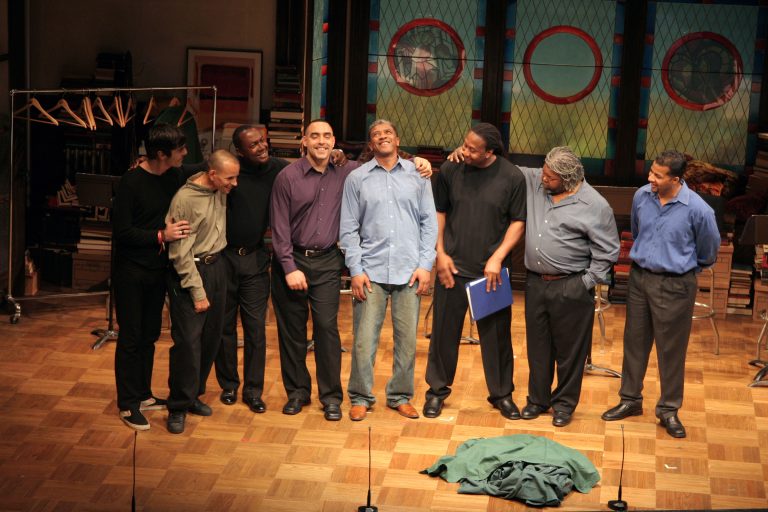
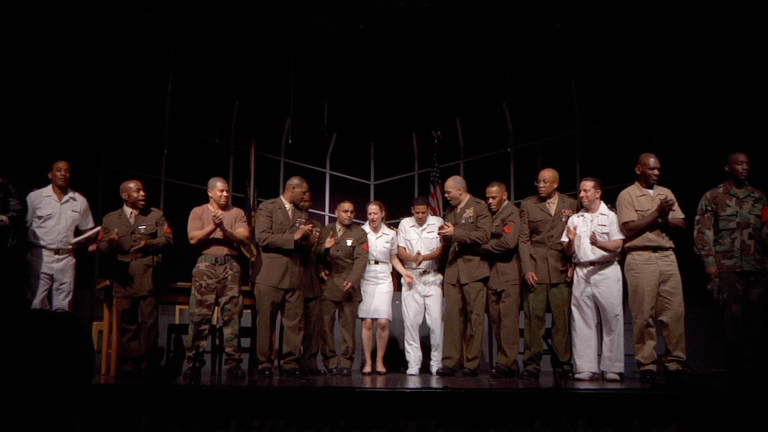
The cast of Reality in Motion performed in 1997 at Sing Sing Correctional Facility with Katherine Vockins seated center. This was the first production of The Theater Workshop, which would later become Rehabilitation Through the Arts.
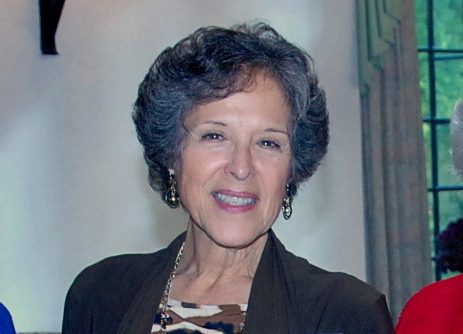
Katherine Vockins (with husband Hans Hallundbaek) after receiving an Honorary Doctorate from the State University of NY/Purchase College
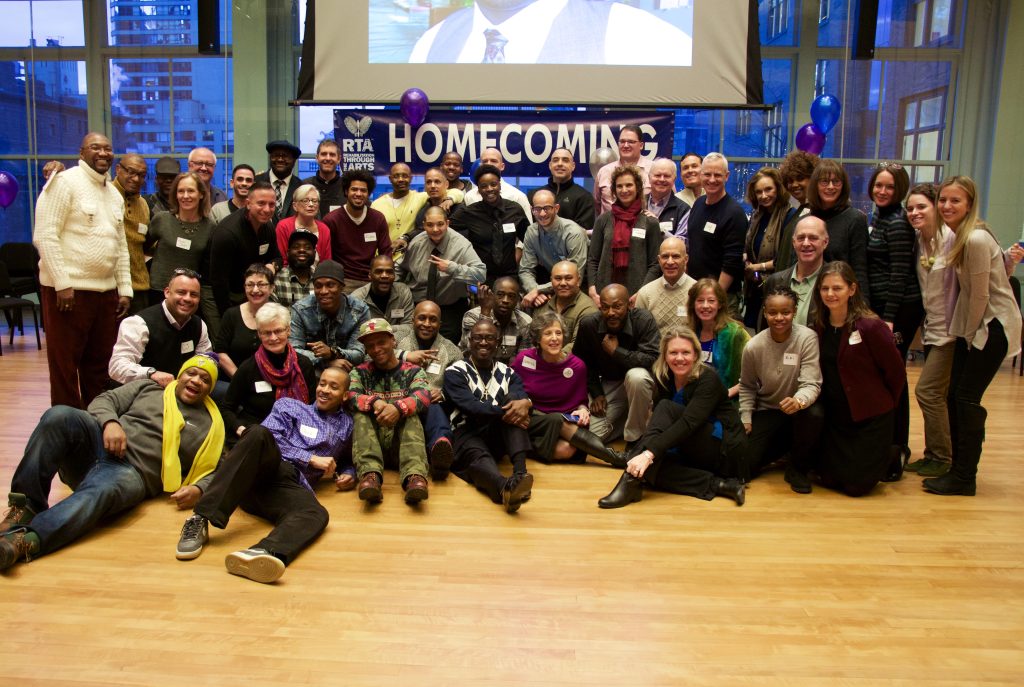
Katherine Vockins, seated center at RTA’s annual Homecoming event in 2017. The yearly event celebrates the RTA participants who have come home in the last year.

Founder’s Legacy

The RTA community is indebted to the extraordinary legacy of its Founder Katherine Vockins for her leadership and vision in changing lives behind prison walls—and beyond—for over twenty-five years.

“I spent half my professional life in the business world as an international market expert with my husband Hans Hallundbaek. When Hans had a ‘mid-life correction,’ I continued to run the business while he looked for more meaning in life, attended New York Theological Seminary and became an interfaith minister. In 1996, curious about his volunteer work teaching a college-degree program to incarcerated men, I followed him behind the walls of New York’s Sing Sing Correctional Facility – an experience that blew away the myths and stereotypes so many of us believe about the incarcerated.

Later at Sing Sing, a small group of men who dreamed about writing a play turned to me to help make it happen… and so Rehabilitation Through the Arts (RTA) was born. I am forever grateful to the founding members at Sing Sing who helped launch the program and set it on the right road, including Dewey Bozella, David Wayne Britton, Sean Dino Johnson, Derek Rogers, Robert Sanchez, Mark Wallace, John “Divine G” Whitfield and Vince Warren.

Early in RTA’s story, the members realized what we were doing was not about making theater or a pathway to Broadway, but about self-development and change, what we now call ‘the process.’ Throughout the years, I witnessed how finishing a drawing, learning a dance, or performing a role in a play gave incarcerated men and women a new sense of what is possible. For so many RTA participants, having experienced genuine achievement, they began looking to see what else can be accomplished – through academics, job training, or greater self-awareness. RTA alumnus Kenyatta Hughes said it best, ‘The arts make you think differently, so you can act differently, so you get different results…isn’t that the definition of rehabilitation?’

There have been so many high points in my 27-year RTA journey, from being awarded game-changing grants from the Art for Justice Fund and the Mellon Foundation, the personal milestone of receiving an Honorary Doctorate from the State University of NY/Purchase College, to leading passionate staff and teaching artists. Most fulfilling, though, has been the privilege of personally knowing hundreds of RTA participants and alumni, all of whom learned to ‘trust the process’ and use the arts as a tool to transform and succeed.”

– Katherine Vockins, Founder of RTA

Our History

next
next
1996

The Theater Workshop

Katherine Vockins leads a group of incarcerated men at Sing Sing in writing and performing a play about their lives.

2001

Rehabilitation Through the Arts - RTA

Participants observe changes in their own attitudes and behavior and rename the organization.

2003

RTA Expands

Sing Sing closes its medium security section. Transferred RTA participants lobby the Department of Corrections to establish RTA at their new facility. Programs launch in Fishkill, Woodbourne & Green Haven correctional facilities.

2006

From Sing Sing to Broadway

The first fundraiser, a performance by RTA alumni at Playwrights Horizons, was a tremendous success.

2007

Challenging Prison Stereotypes

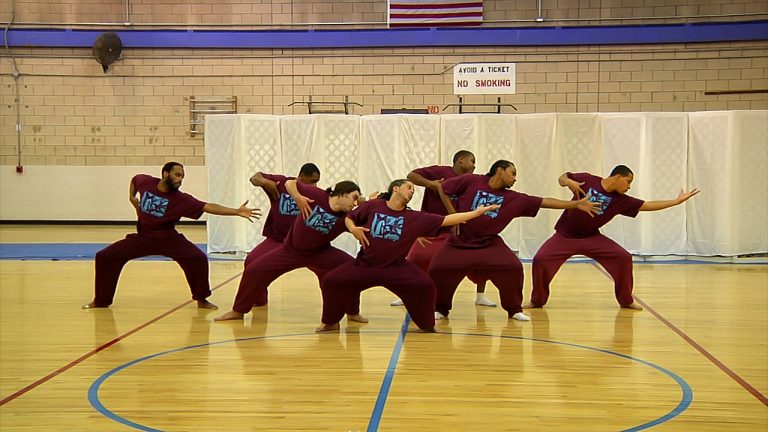
RTA establishes the first modern dance program in New York State for incarcerated men.

2008

The Women's Program

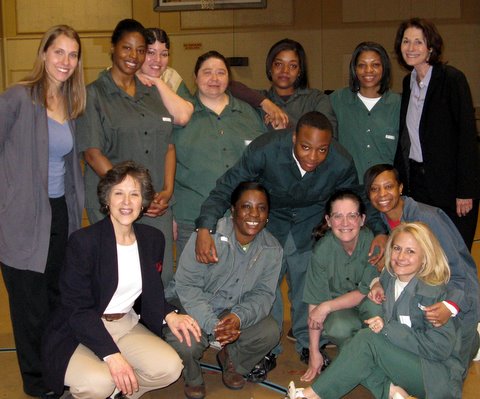
RTA begins working at Bedford Hills, New York State’s only maximum-security women’s prison.

2011

Welcome Home

RTA’s first Homecoming is a joyous celebration, and has since been held each year to welcome participants back to their families and communities.

2015

There's No Place Like Home

After years of requests, the Department of Corrections allows participants’ family members to attend their first production. The Wizard of Oz was chosen for this wonderful event.

2016

Dramatic Escape

Debut of a feature-length documentary that tells the story of RTA by following the stage production of A Few Good Men at Sing Sing.

2018

RTA Alumni Project

RTA's first alumni initiative was a project that explored the experience of reentering society. The project culminated in an original play, Home is a Verb, performed at Carnegie Hall studios and as a benefit performance on Broadway.

2020

Launch at Sixth Facility

RTA begins operating at Taconic Correctional Facility, a medium security prison for women.

2021

25th Anniversary

RTA celebrates a quarter century working with hundreds of men and women, in prison and released, who are leading productive lives grounded in family, work and community.

Make an Impact

There are many opportunities to make an impact with RTA.