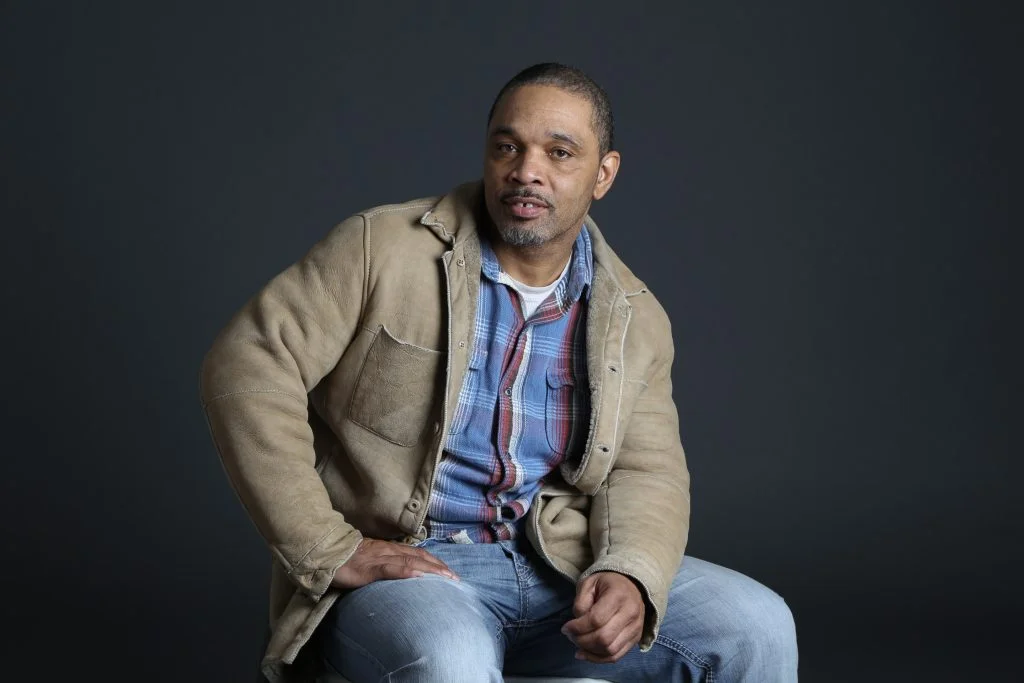
Many people were introduced to Clarence Maclin through his powerful performance in SING SING, the acclaimed film inspired by Rehabilitation Through the Arts’ theater program at Sing Sing Correctional Facility. For those within the RTA community, however, Clarence’s story began long before the cameras started rolling.
A longtime RTA participant, Clarence found purpose, creativity, and self-expression through theater while incarcerated. Since returning home in 2012, he has dedicated himself to supporting young people, building community, and creating opportunities for others through the arts.
In this Alumni Spotlight, RTA Board Director Mikki Shaw,Ed.D. sits down with Clarence to discuss his journey from the stage at Sing Sing to the screen in Sing Sing, the lessons he carried with him after release, his work with youth, and what comes next as he continues to expand his impact both inside and outside correctional facilities.
Interview by Mikki Shaw.
Almost exactly as it was portrayed in the film, Sing Sing, Clarence first became involved with RTA as a result of a drug deal in the yard.
The first 5 or 6 years I was in prison, I was involved in all kinds of negative stuff. One night when the yard was closed, I went to sell in the chapel, and there was a play. I watched it for a while and I realized that I knew some of the men who were on stage. I thought everyone was from the outside. And there were women there! I thought it might be a good way to meet women. The first play I was in was a small part with no lines, but when the director realized I could act, they added some lines for me. The play was Stratford’s Decision. After that, I had much bigger roles, I played the lead in Oedipus Rex, and Arab in West Side Story and the Ghost in Othello. The ghost role didn’t have a lot of lines, but it had a …presence.
What did RTA do for you?
RTA allowed me to find my voice, express myself in ways I never had. It also showed me how other people handled things. I stepped into characters who had problems like mine, things I could understand but in other days and times, and I could see how they handled the same things I did.
Clarence came home in 2012 and he was lucky to have support from organizations like RTA, Hudson Link and Exodus, as well as from family. Although his mother remains in the south, his daughter and his three grandkids were nearby. His first address was in Queens with a girlfriend, but that was short lived. He described it as an “atmosphere not conducive to change and growth. There was an expectation that I would stay the same but that’s not what I wanted.” Within a short time, he returned to Mount Vernon, where he grew up and where he’d been arrested. He knew that he’d be remembered in not-so-positive ways.
The first thing I did was I visited the Police Station and the Mayor’s Office. I let them know that I was back, that things were different and let them know I’d help out in any way I could.
Impressive, right? Clarence lives now in Connecticut, to remain close to his daughter and grandkids who are enrolled members of The Mashantucket Pequot Tribal Nation and live on the reservation. The older kids are teenagers now and used to visit him in prison. The youngest, at 4, was too young. “They all call me PopPop. My daughter is in the Council of Elders and they are all involved with tribal affairs.”
In 2013, he got his first full time “meaningful” job at Lincoln Hall, a boys’ facility for “underserved and vulnerable boys” since 1863.
I started as line staff, became a cottage supervisor and eventually became program staff. The program I started was for the boys to use theater and role playing to act out their everyday conflicts and find better ways to deal. I used music and theater. One thing I did was give them the lyrics – not the music – to Kenny Rogers’ The Gambler. We talked a lot about the lyrics, “You gotta know when to hold ‘em, know when to fold ‘em; know when to walk away and know when to run.” It gave us a framework to talk about everyday conflicts, and when I finally played them the music, they couldn’t believe it was country. Another thing I used was Rudyard Kipling’s poem, “If.” It was a good poem to talk about the transition to becoming a man.
After 160 years, Lincoln Hall is closing, but fortunately, other doors are opening for Clarence. He is doing work in the Connecticut community where he lives, and he will be repping the movie and RTA in the coming months. More exciting, Clarence has been cleared by DOCCS to go inside correctional facilities and he will be working as a Teaching Artist!
The film work with Greg Kwedar and Colman Domingo and Sing Sing has been life changing for Clarence and he hopes there will be future acting opportunities.
Brent Buell and Greg Kwedar first contacted me about the film and I immediately said yes. They knew, you put a spotlight on the ground, and I jump in it. I helped with the script, they wanted to be sure the language was authentic. All of us read it over and made suggestions. And Colman and I hit it off from the beginning when we were rehearsing on zoom. I learned so much from him especially about making the transition from the stage to film. In theater, everything is big – your voice has to be loud, movements and gestures are exaggerated. With film you have a smaller view, an 8 inch camera, and gestures can quiet and small, and voices can be soft.
My last question for Clarence was “what can you tell us about Colman that we don’t already know?” Right off the bat, he told me their birthdays are a day apart and they continue to chat regularly on the phone. What else?
He knows a lot of old songs and can sing and recite them form memory. He loves to dance. He’s very tall and flare and he loves to wear his clothes! He’s a ball of positive energy and great to be around.
Clarence has a manager and he’s hoping to get work as an actor. He has a dream of writing a script about a black cowboy and starring in it. “But no matter what,” Clarence says, “I want to continue my work with kids in the community.”
I reminded Clarence that Colman Domingo didn’t get his first big break until he was 50. “Same trajectory,” Clarence laughed. Who knows what can happen after Sing Sing premieres?