By Alice Speri
February 22, 2020
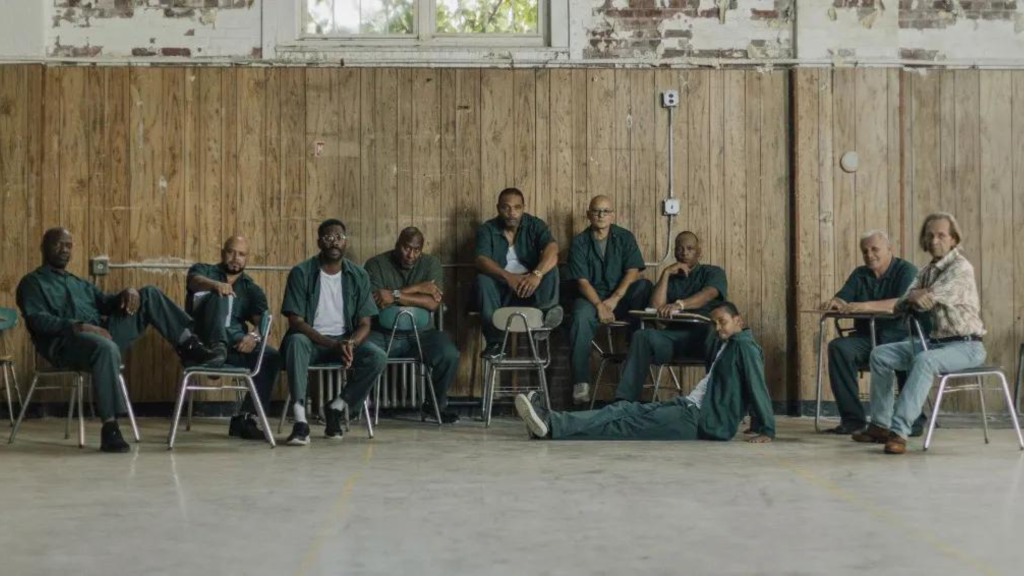
A group of families and New York state officials gathered on a workday morning last month for a theatrical performance of a historical drama about slavery and human freedom. But it was an unusual setting for a play, especially for one pondering the question of liberation, because the stage was deep inside a maximum-security prison, and the actors were a group of incarcerated men, many of whom still face decades behind bars.
At the end of the play, the two-dozen cast members lined up at the front of the stage as one actor after the other removed their costumes: a simple, white T-shirt with the word “slave” or the character’s slave name written across the chest. Below the stage, in the first row, a group of suited senior corrections officials looked on uncomfortably.