As we celebrate Father’s Day, we are reminded of the vital role not just fathers, but all caregivers, play in shaping the lives of their children. However, for many families, the reality of incarceration disrupts these bonds, creating cycles of emotional and social challenges that span generations.
On this special day, it’s essential to recognize the profound impact that initiatives like Rehabilitation Through the Arts (RTA) have in helping caretakers reconnect with their families and break the generational cycle of incarceration.
The Impact of Incarceration on Families
The emotional and psychological damage to incarcerated people, their families and their communities are incalculable. When a caretaker is incarcerated, the consequences extend far beyond the prison walls. Children lose a parental figure, often leading to emotional distress, behavioral issues, and academic difficulties. The absence of a parent can also place significant financial and emotional strain on the remaining caregiver, who must navigate the challenges of single parenting under stressful circumstances.
Research indicates that maintaining family connections during incarceration significantly aids in the rehabilitation process and reduces recidivism rates. Strong family bonds provide emotional support and a sense of responsibility, which are crucial for an individual in prison’s successful reintegration into society.
Reconnecting Families Through the Healing Power of Art
The US prison system is based on punishment. The problem is, it doesn’t work – more than half of people released from prison are back within three years. This revolving door breaks down families and communities and costs taxpayers billions.
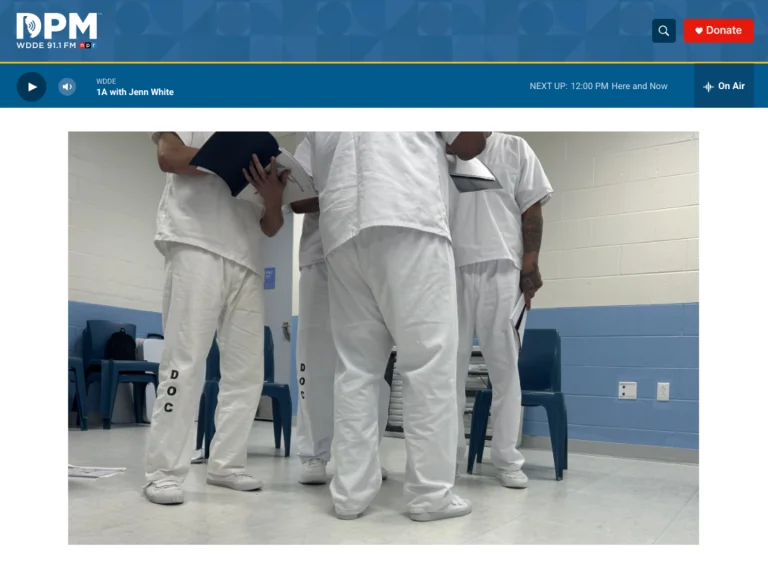
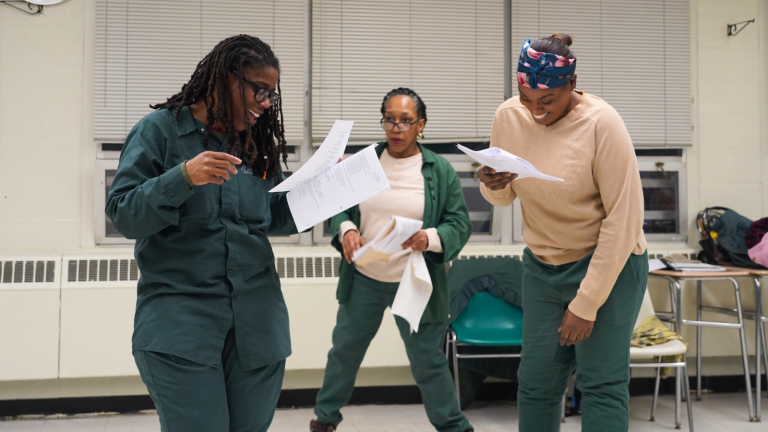
RTA offers a better approach. Founded at Sing Sing in 1996, RTA works with professional teaching artists to lead year-round workshops in theater, dance, music, creative writing, and visual arts. Our model provides an intensive, comprehensive arts program in prison that builds critical life skills so that people can meet the challenges of connecting with family and community when released.
RTA demonstrates that an approach based on human dignity is vastly more successful than one based on punishment. Less than 3% of RTA members return to prison, compared to the national recidivism rate of 60%.
Testimonials from participants and their families illustrate the significant impact of RTA:
Charisse P. shares her brother’s journey through RTA, highlighting his transformation and the positive changes she has witnessed, “He raves about your program all the time. I have seen him take tremendous strides towards his rehabilitation over the past years. I am very proud of him. Although I hate that my brother is incarcerated, I am so glad that he has turned himself around. That’s one of the reasons I try to do as much as I can on the outside to amplify his cause. The work we have been doing with the Center for Community Alternatives has been very productive. I look forward to the day that my brother comes home.” Her words reflect the broader impact of arts-based rehabilitation programs: they not only change the individuals involved but also inspire their families and communities.
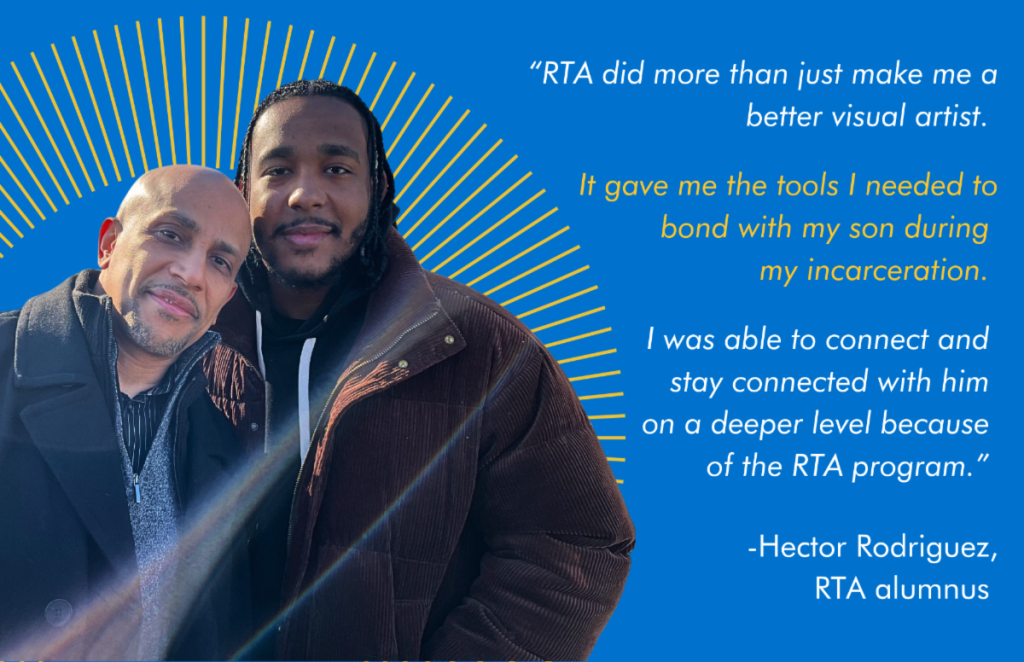
When Hector Rodriguez Sr. knew he would be a father, he was scared. He had already served seven years of what would be a twenty-eight to life sentence in prison. He didn’t want the same life for his son, and he knew that children of incarcerated parents were likely to end up on the same path of serving time behind bars. He states, “I wanted to be a better father than the one I had growing up. I knew that would be a challenge since I was in prison, so I sought out programs like RTA that would give me the tools to be the best father I could be under the circumstances.” At RTA, Hector Sr. found the tools to improve himself despite being in prison.
“… I sought out programs like RTA that would give me the tools to be the best father I could be under the circumstances.” – Hector Rodriguez Sr
His son, Hector Rodriguez Jr., credits RTA with helping to develop their strong relationship, emphasizing how the arts facilitated their reconnection and his father’s transformation, “RTA was essential in developing the relationship that I have with my father today,” said Hector Jr. “Hearing stories about how he was in the past and seeing the person he is today is truly remarkable. We connected through our passion for arts and I feel that RTA is the reason that was ever possible. I’ve witnessed him change firsthand and believe that RTA kickstarted the transformation that brought my father back home.”
“RTA was essential in developing the relationship that I have with my father today.” – Hector Rodriguez Jr.
Jesse is a currently incarcerated RTA participant. His recent experience after a performance of the production Thoughts of A Colored Man at Green Haven Correctional Facility also highlights the personal growth and reconnection facilitated by RTA. After the performance he said, “This was one of the best moments of my life. My wife, my daughter, my mom — they never seen this side of me.” Sharing his artistic side with his family allowed them to see a new dimension of Jesse, strengthening their bond.
An anonymous RTA alum also underscores the life-changing impact of the program, emphasizing the confidence and skills gained through participation. “RTA has done more for me than any other program could. In fact, RTA gave me the confidence to tackle college. Because of RTA, I can proudly show the people in my life that I am truly ready to be the father, husband, son, brother and example that they can count on.” This transformation enabled him to pursue higher education and become a reliable and positive figure for his family.
“…Because of RTA, I can proudly show the people in my life that I am truly ready to be the father, husband, son, brother and example that they can count on.” – Anonymous RTA alum
Ending the Generational Cycle of Incarceration
RTA and similar programs are essential in addressing the complex challenges of incarceration. By fostering personal growth, self-expression, and emotional healing, arts-based rehabilitation helps incarcerated individuals build a foundation for a better future. These programs provide critical thinking, collaboration, communication, and empathy skills, which are vital for reentry into society.
Industry research supports the effectiveness of arts programs in correctional settings. Studies show that participation in these programs leads to reduced disciplinary infractions, lower recidivism rates, and improved mental health. By engaging in creative processes, incarcerated individuals develop a stronger sense of identity and self-worth, essential for breaking the cycle of incarceration.
This Father’s Day, let us recognize all the caretakers who, despite their circumstances, strive to become better versions of themselves for their children. RTA offers a powerful means of transformation, providing incarcerated individuals with the tools to reconnect with their families and end the generational cycle of incarceration.
Through programs like RTA, we can help people in prison rebuild their lives, reconnect with their loved ones, and create a brighter future for the next generation.
—-
Rehabilitation Through the Arts thrives on the generosity and support of individuals like you. Help us break the generational cycle of incarceration by making a donation today.