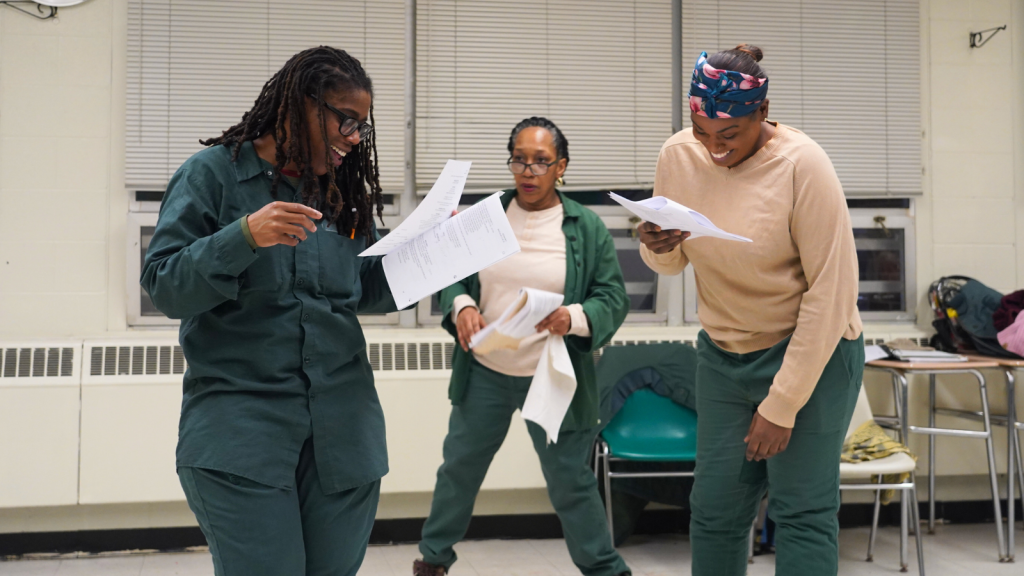
Inside Bedford Hills Correctional Facility, participants in Rehabilitation Through the Arts (RTA) are preparing to bring Sister Act: The Musical to life on April 9, 2026.
Beyond the choreography and comedy, this production is something much deeper: a space where individuals are discovering their voices, building community, and developing skills that extend far beyond the stage.
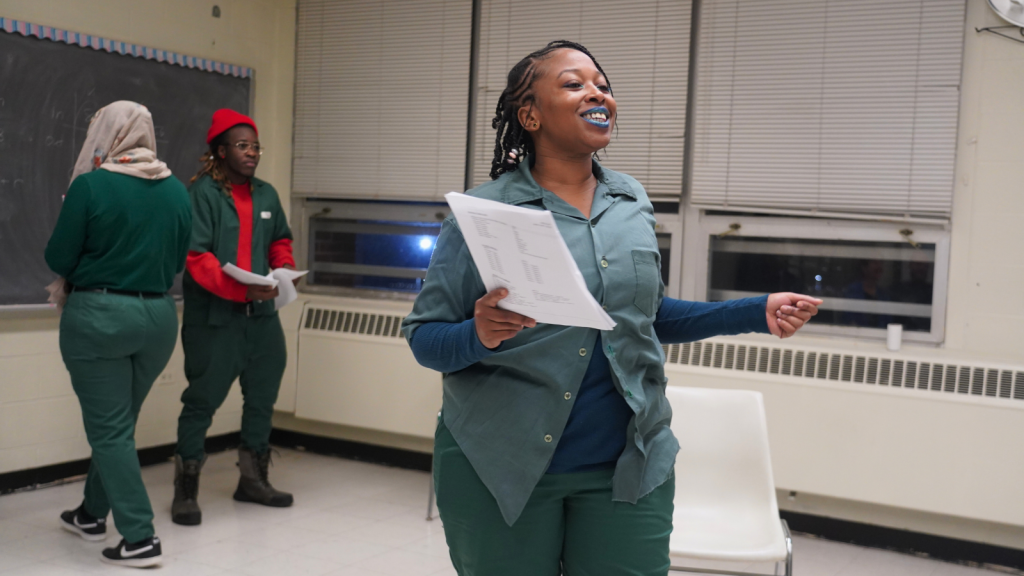
Pictured above: RTA participant Christen D.
Finding Voice, Finding Self
For many cast members, stepping into Sister Act has been about more than performance—it’s been about personal transformation.
Devonne W., who goes by “Phoenix” and plays Sister Mary Robert, describes a journey that mirrors her character’s arc. “When my character defies Mother Superior and speaks up… she finds her voice and embraces her true self,” she shares. “Like my character, I have metamorphosed into a stronger, bolder, more confident individual.”
That process of finding one’s voice is central to RTA’s work. Through theater, participants practice communication, emotional expression, and confidence—skills that are essential for rebuilding lives and navigating the world beyond incarceration.
Kim B., who plays Mother Superior, reflects on her own growth: “I personally found my voice in prison and am still finding ways of expression.”
Through RTA, she shares she has also developed patience, empathy, and leadership—qualities that emerged in ways she hadn’t expected. “I never saw myself in a leadership role, but it seems to come naturally.”
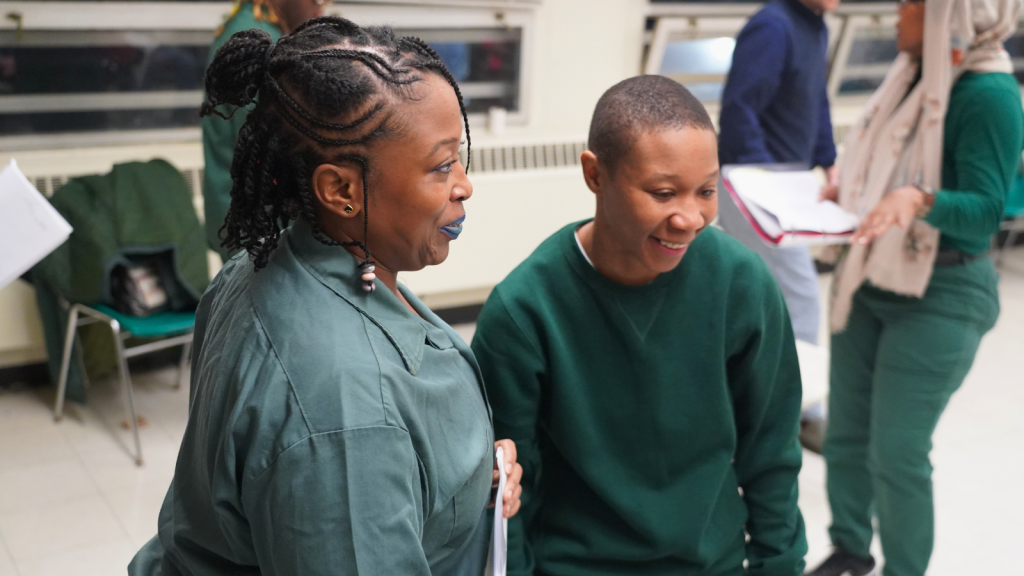
RTA participants Christen D. (left) and Key (right)
A Space for Growth and Skill-Building
RTA productions are rigorous. They require commitment, discipline, and collaboration—skills that translate directly into life beyond the stage.
For T.C., who takes on multiple roles in the production, the experience has been both “rewarding” and foundational. “Transformation, voice, and courage is my very foundation,” they share. Through the process, they’ve gained a sense of “positive responsibility” and a deeper belief in their own abilities.
“These are transferable life skills I can use upon my release,” Phoenix explains. “Teamwork, commitment, patience, respect, support systems… have all improved.”
For Tanika S., the program has rekindled a long-held passion. “Participating in RTA has reignited a desire to be my full artistic self and frees my mind, uncaging my creativity.” Having studied acting before her incarceration, she found her way back to that part of herself through RTA—demonstrating how the arts can reconnect people to identity, purpose, and possibility.
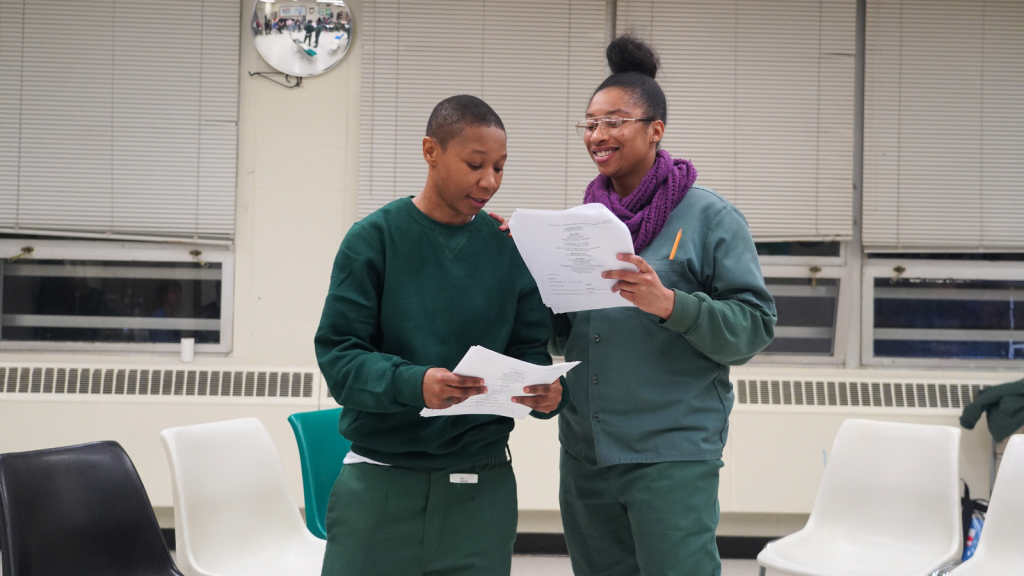
RTA participants Key (left) and Shenia (right) rehearsing their lines for Sister Act.
Sisterhood and Community Behind the Walls
At its heart, Sister Act is a story about sisterhood—and for this cast, that theme resonates deeply.
“Especially being incarcerated, the communities of reciprocity and love we build in here are so important,” says Alexa S. who plays multiple roles. Through the production, she has found not only an artistic outlet, but a space to “feel like a human being” and to safely experience and express emotion.
Tankia S. echoes this sentiment: “No matter the flaw, we are still family. We uplift each other, never turning our backs to a sister in need.”
Even for those newer to the program, the impact is immediate. Kathy D., who plays Sister Mary Lazarus, shares that the experience has opened her eyes “to how much talent there really is in this place.”
RTA creates a rare environment where, as Kim B. puts it, “prison is suspended during the time you are in class.” In that space, participants are not defined by their past—they are artists, collaborators, leaders, and community members.
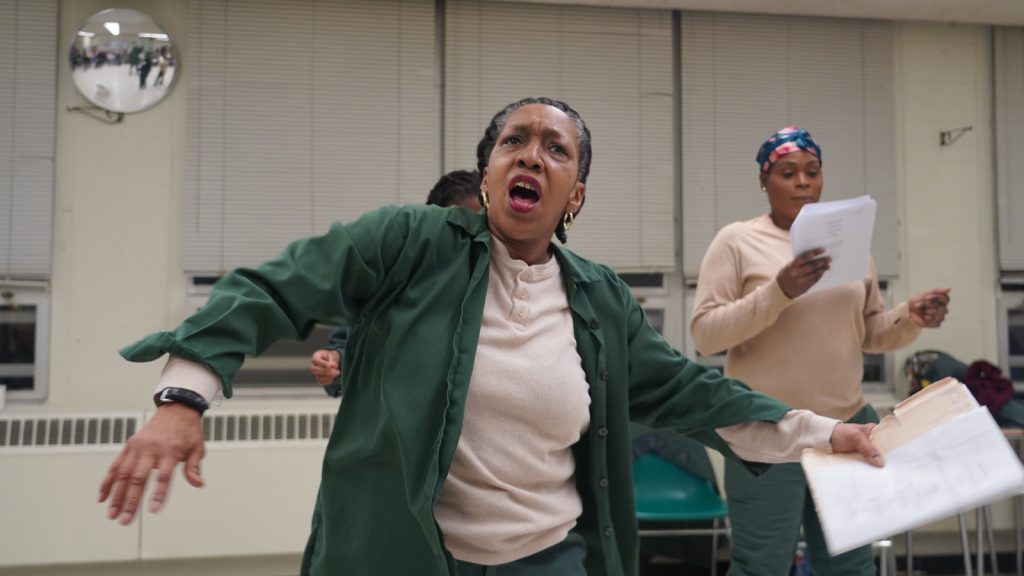
RTA participant Jackie rehearsing for Sister Act.
Transformation That Extends Beyond the Stage
The impact of RTA doesn’t end when the curtain falls.
Participants speak about how the skills and growth they experience through productions like Sister Act will shape their futures—whether through creative pursuits, professional opportunities, or simply a renewed sense of self.
“I hope this experience opens doors to creative opportunities… to help others heal, transform, and succeed,” Tankia S. shares.
For others, the transformation is more internal but equally profound. Alexa S. reflects on how the program has deepened her understanding of her own emotions and strengthened her connection to community. “RTA allows a judgment-free place… it is truly transformational.”
And for many, the message they hope audiences carry forward is simple but powerful: “That people can change,” Phoenix says.
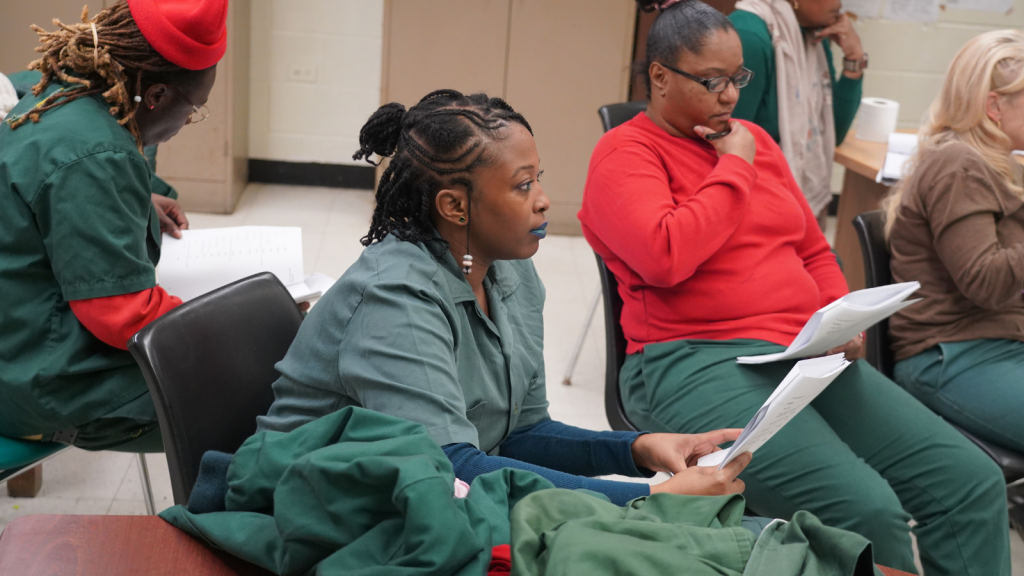
More Than a Performance
As the cast prepares to share Sister Act with audiences, they are not just performing a story of transformation—they are living it.
Through RTA, participants are developing the skills, confidence, and sense of purpose that are essential for building new futures. They are learning to collaborate, to lead, to express themselves, and to believe in their own potential.
And perhaps most importantly, they are reminding all of us of something deeply human: “There are amazing people everywhere,” Tankia S. reflects. “Talented people everywhere… many of us are behind bars.”
Sister Act at Bedford Hills is more than a production. It is a testament to the power of the arts to unlock potential, rebuild lives, and create community—even in the most unexpected places.
—
Rehabilitation Through the Arts thrives on the generosity and support of individuals like you. Help us break the cycle of incarceration by bringing more productions like this to people in prison.